


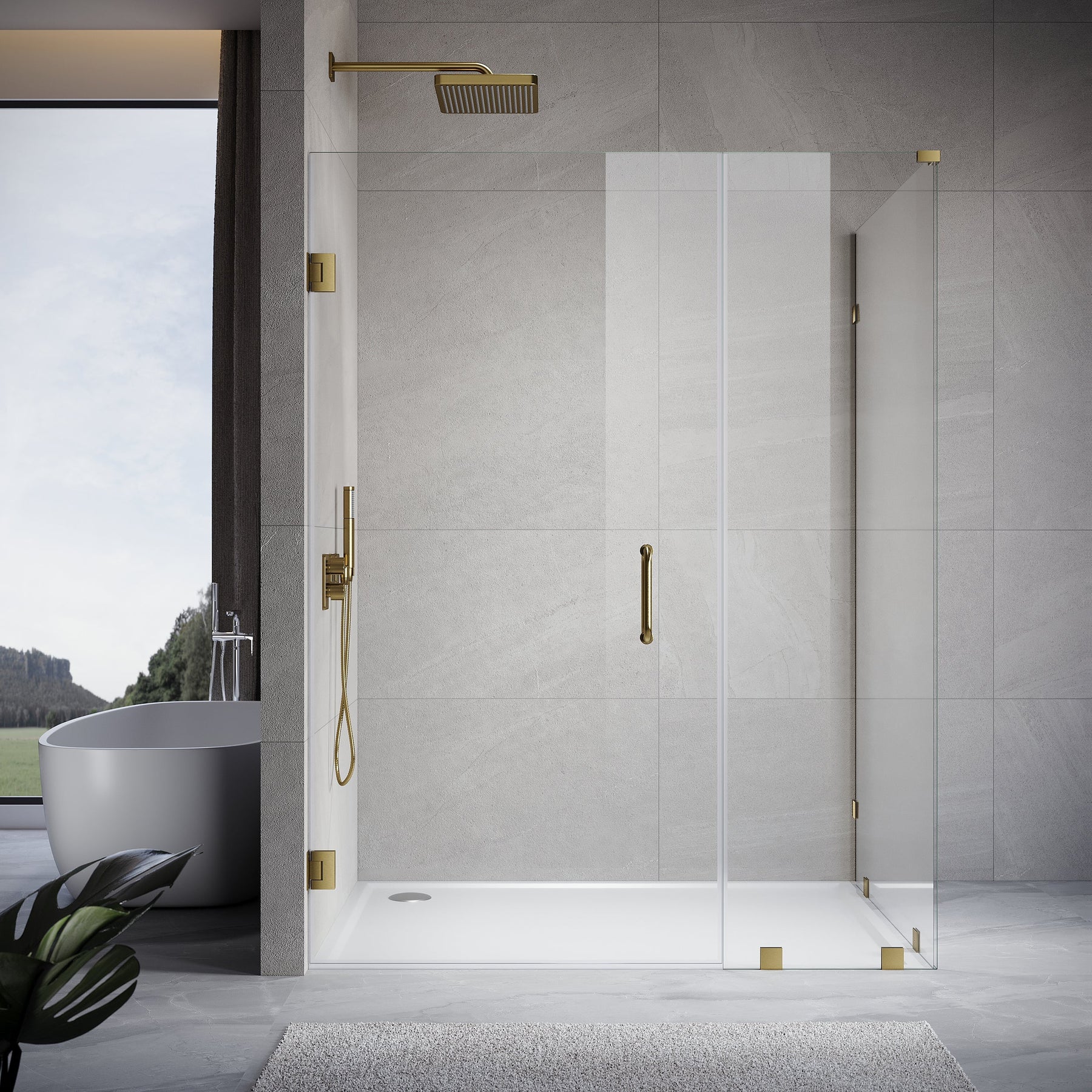
For most of the last decade, the answer to "frameless or framed?" was a budget question. Framed doors were affordable and widely available. Frameless doors were the upgrade — a premium specification that cost $400–$600 more and required sourcing through a showroom.
In 2026, factory-direct pricing has compressed that gap to under $100 in many cases. Which means the decision is no longer about what you can afford. It's about what actually performs better for your bathroom — and for that question, the answer is less ambiguous than most comparison articles will tell you.
Core Differences at a Glance
| Factor | Frameless | Framed |
|---|---|---|
| Glass thickness | 3/8 in. (10mm) | 1/4 in. (6mm) typical |
| Hardware | 304 / 316 stainless steel | Aluminum or zinc alloy |
| Cleaning effort | Low — no frame channels | High — track collects residue |
| Aesthetic | Open, modern, spa-like | Traditional, structured |
| Wall tolerance | Tighter — needs plumb walls | More forgiving |
| Water seal | Relies on seals + caulk | Frame provides tighter seal |
| Price (factory-direct, 2026) | From $650 | From $550–$600 |
| Lifespan (hardware) | 10+ years (stainless) | 3–8 years (alloy) |

Aesthetics: Why Frameless Wins on Visual Impact
A framed shower door is immediately identifiable by its aluminum or steel perimeter — the border that runs around every glass panel edge. In a bathroom with strong tile work, a prominent frame competes visually with the tile rather than letting it read through. The result is a bathroom that looks finished, but segmented.
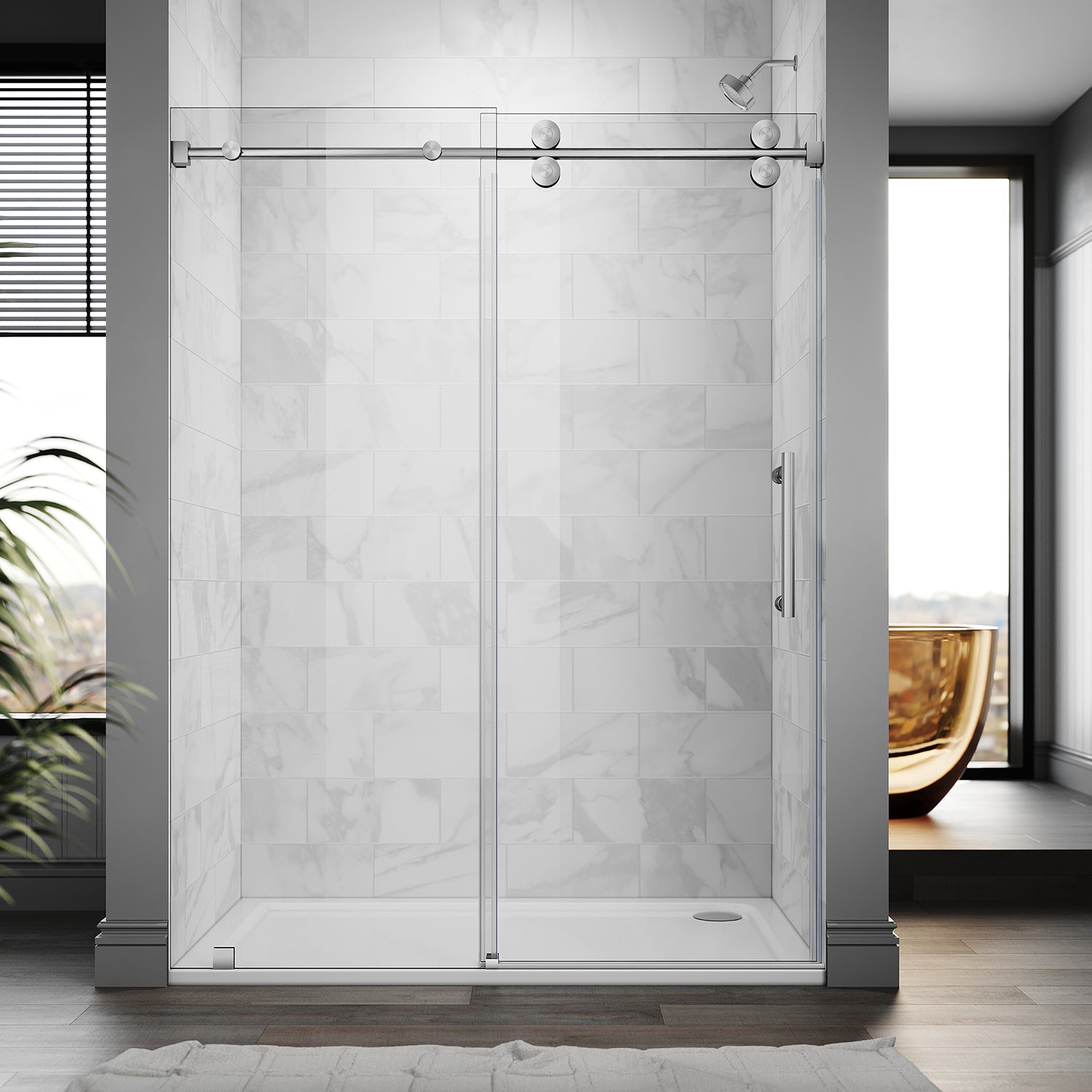
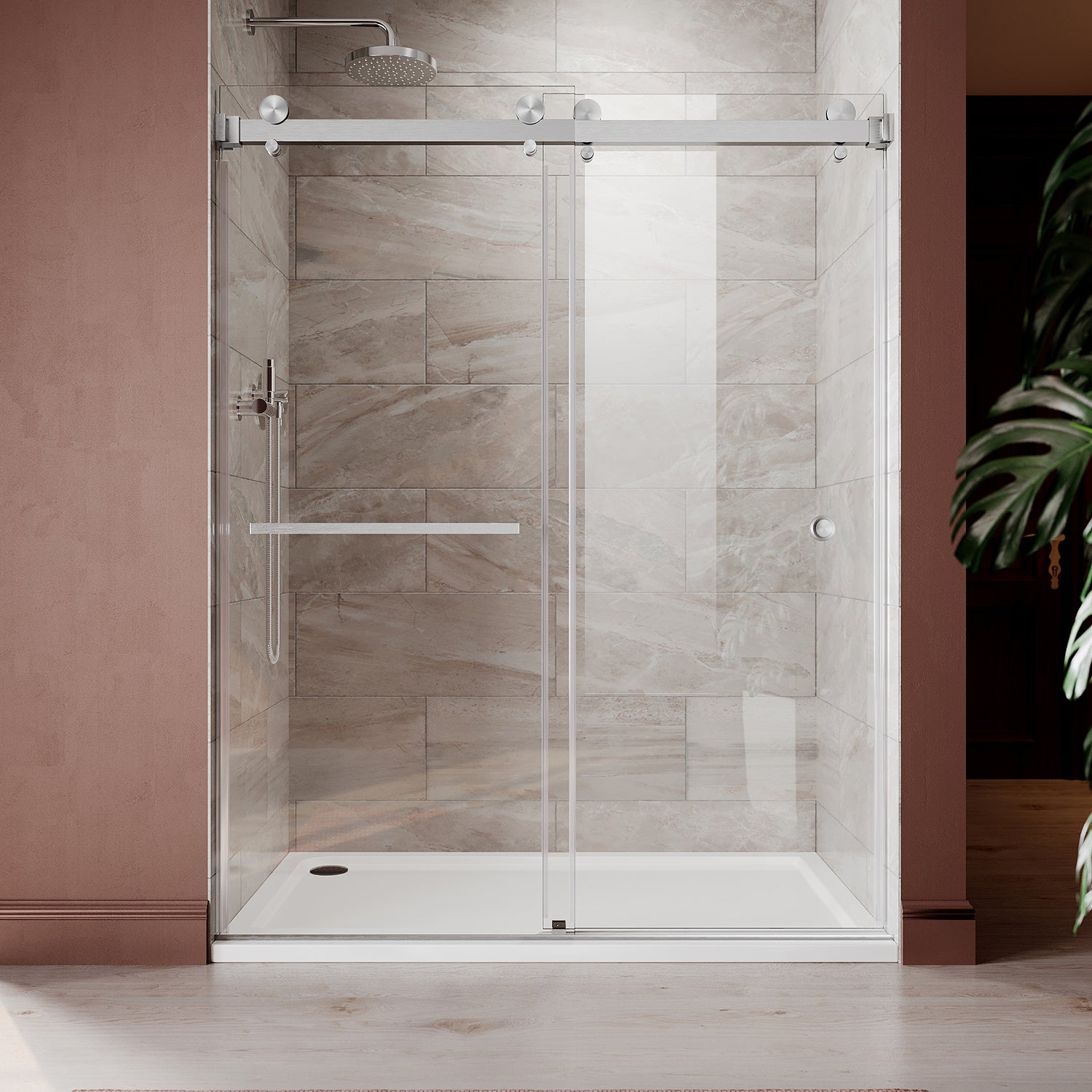
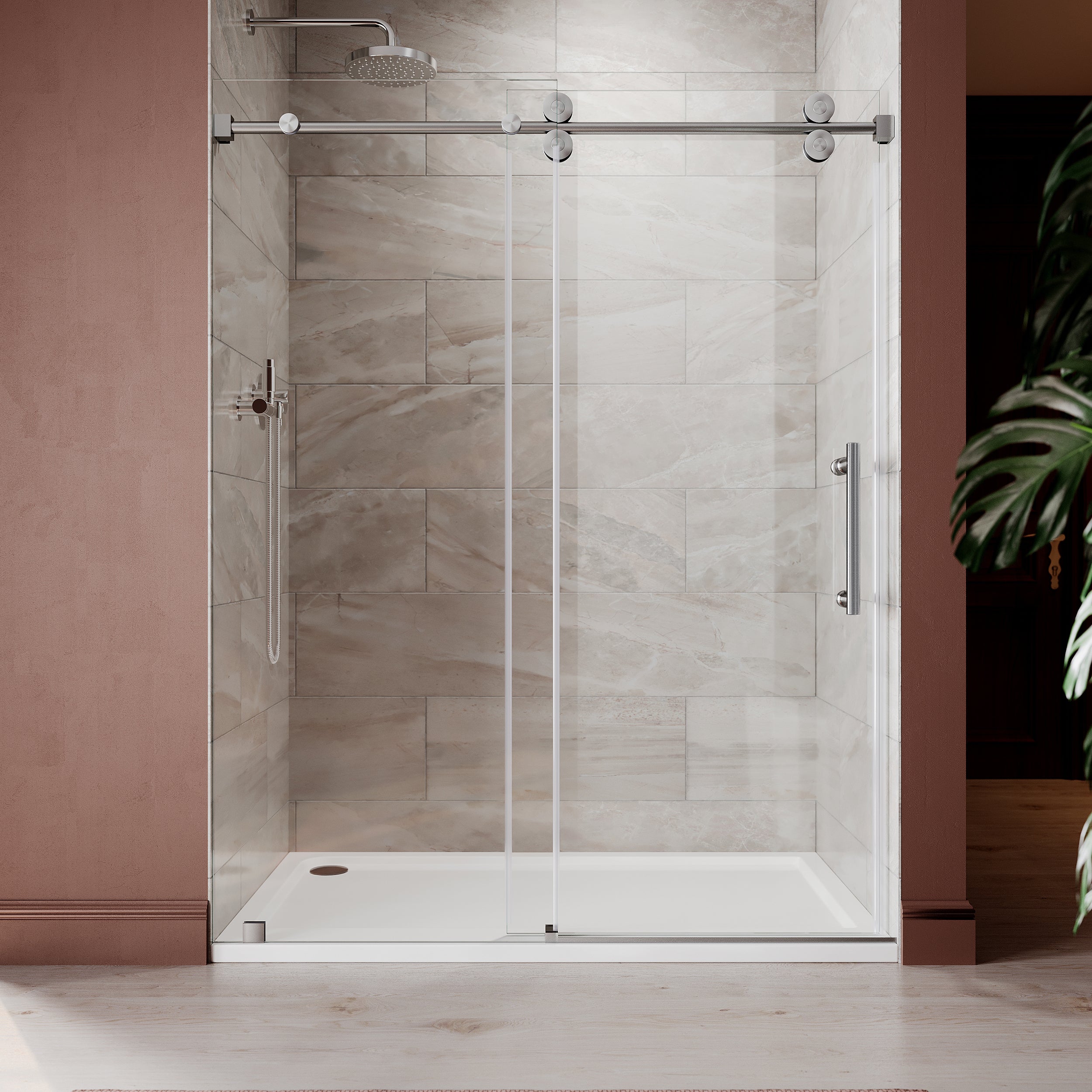
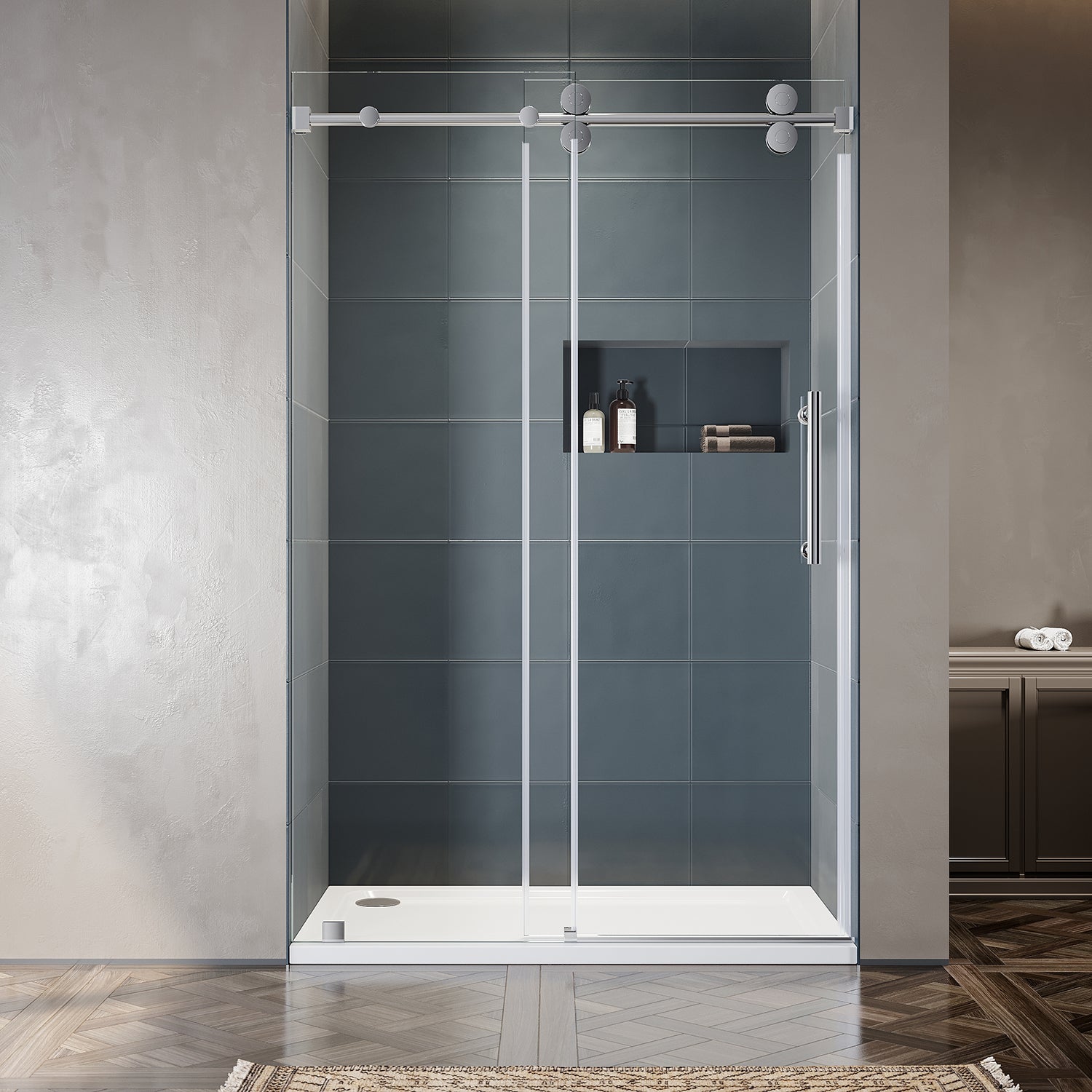
A frameless door removes that perimeter entirely. The glass panel meets the wall with a minimal silicone seal. The tile, the floor, and the room beyond the shower are visible without interruption. The shower feels larger than its footprint — not because anything changed dimensionally, but because there's no visual barrier cutting the room into zones.
- Traditional or transitional bathroom design
- Tile pattern that benefits from a defined border
- Budget project where $100 difference matters
- Walls significantly out of plumb (frame hides gaps)
- Contemporary, minimalist, or spa aesthetic
- Statement tile that should be fully visible
- Small bathroom where visual openness matters
- Long-term installation where hardware longevity counts
Cleaning and Maintenance: The Numbers
This is where the long-term case for frameless becomes most concrete — and where most comparison articles understate the difference.
A framed shower door has three maintenance surfaces that a frameless door doesn't: the bottom track, the vertical frame channels, and the horizontal header channel. In a shower used twice daily, those channels accumulate soap residue, hard water deposits, and mildew within days. They require a brush and a cleaning solution to clear — wiping doesn't reach the channel interior.
| Task | Framed door | Frameless + EnduroShield |
|---|---|---|
| Weekly glass wipe-down | 15–20 min/week | 3–5 min/week |
| Track / channel scrubbing | 20–30 min/month | None required |
| Annual deep clean | 2–3 hours | 30–45 min |
| Estimated annual time | ~20–25 hours | ~4–6 hours |
Over a 10-year installation: framed door requires an estimated 200–250 hours of cleaning. Frameless with EnduroShield: 40–60 hours.
The frame channels also degrade over time — the sealant between the track and the shower floor cracks, the aluminum oxidizes, and the gaskets shrink. These are replacement costs that frameless installations don't accumulate.
Installation: Both Are DIY-Friendly — With Different Requirements
- Frame absorbs minor wall imperfections
- Bottom track requires precise leveling
- More components — longer assembly sequence
- Frame covers measurement errors up to 1/2 in.
- Typical DIY time: 2–4 hours
- Walls must be plumb within 1/8 in.
- No bottom track — simpler floor seal
- Fewer components — cleaner sequence
- Measurement precision is critical
- Typical DIY time: 2–3 hours (two-person lift)

Price in 2026: The Gap That Changed the Answer
The historical price gap between framed and frameless doors was $400–$600 through retail channels. That gap justified choosing framed on budget grounds — the performance difference wasn't worth a $500 premium for most homeowners.
Factory-direct pricing in 2026 has compressed that gap significantly:
| Channel | Framed (60 in.) | Frameless (60 in.) |
|---|---|---|
| Big-box retail | $300–$500 | $700–$1,100 |
| Local showroom | $500–$700 | $900–$1,400 |
| Unikoo factory-direct | From $550 (UKS13) | From $650 (UKS04) |
At the factory-direct price point, the difference between a framed UKS13 and a frameless UKS04 is approximately $100. That $100 buys thicker glass, stainless hardware, EnduroShield coating, and the elimination of track maintenance — for a 10-year installation.

When Framed Is Still the Right Choice
Despite the performance advantages of frameless, there are genuine scenarios where a framed door is the correct selection:
If wall plumb exceeds 1/4 inch variation over the door height and remediation isn't feasible, the frame covers the gap that frameless hardware can't.
For tenant-occupied properties where replacement frequency is a budget factor, the lower upfront cost of framed may outweigh the long-term maintenance advantage of frameless.
In bathrooms with older subfloor waterproofing or adjacent rooms sensitive to moisture, the tighter factory seal of a framed door provides additional protection margin.
The Verdict
In 2026, with factory-direct pricing making the $100 difference the relevant comparison, frameless is the better choice for most bathroom renovations — not on aesthetic grounds alone, but on glass thickness, hardware longevity, and maintenance hours over the life of the installation.
Framed doors remain the correct choice when walls are significantly out of plumb, when water containment is the primary concern, or when the property context makes upfront cost the overriding factor.
For every other scenario — a homeowner renovating a primary bathroom, a contractor specifying for a quality-tier project, a buyer comparing delivered prices honestly — the frameless door at factory-direct pricing wins the comparison it used to lose.
Shop frameless shower doors · Shop framed bypass doors · Custom sizes available