Design Guide · Glass Options · 2026
Tinted Shower Glass:
Your Secret Interior
Design Strategy
Most shower door decisions never consider glass color. That's a missed design opportunity — glass tint and opacity are the choices that determine how an enclosure reads in its room.
Standard Clear
Optiwhite
Bronze
Grey
Frosted
Reeded
Most shower door decisions focus on configuration, hardware finish, and price. Almost none focus on the glass itself — beyond whether it's clear or frosted. Glass color and opacity determine how a shower enclosure reads in its room, how it interacts with the tile and light you've already specified, and whether the enclosure becomes part of the bathroom's visual language or an interruption to it.
Tinted and specialty glass options aren't a luxury upgrade category. They're a design tool — one most buyers don't know they have access to until after the door is installed.
The Glass Options You Actually Have
Standard Clear
~0.1% iron oxide · faint green tint
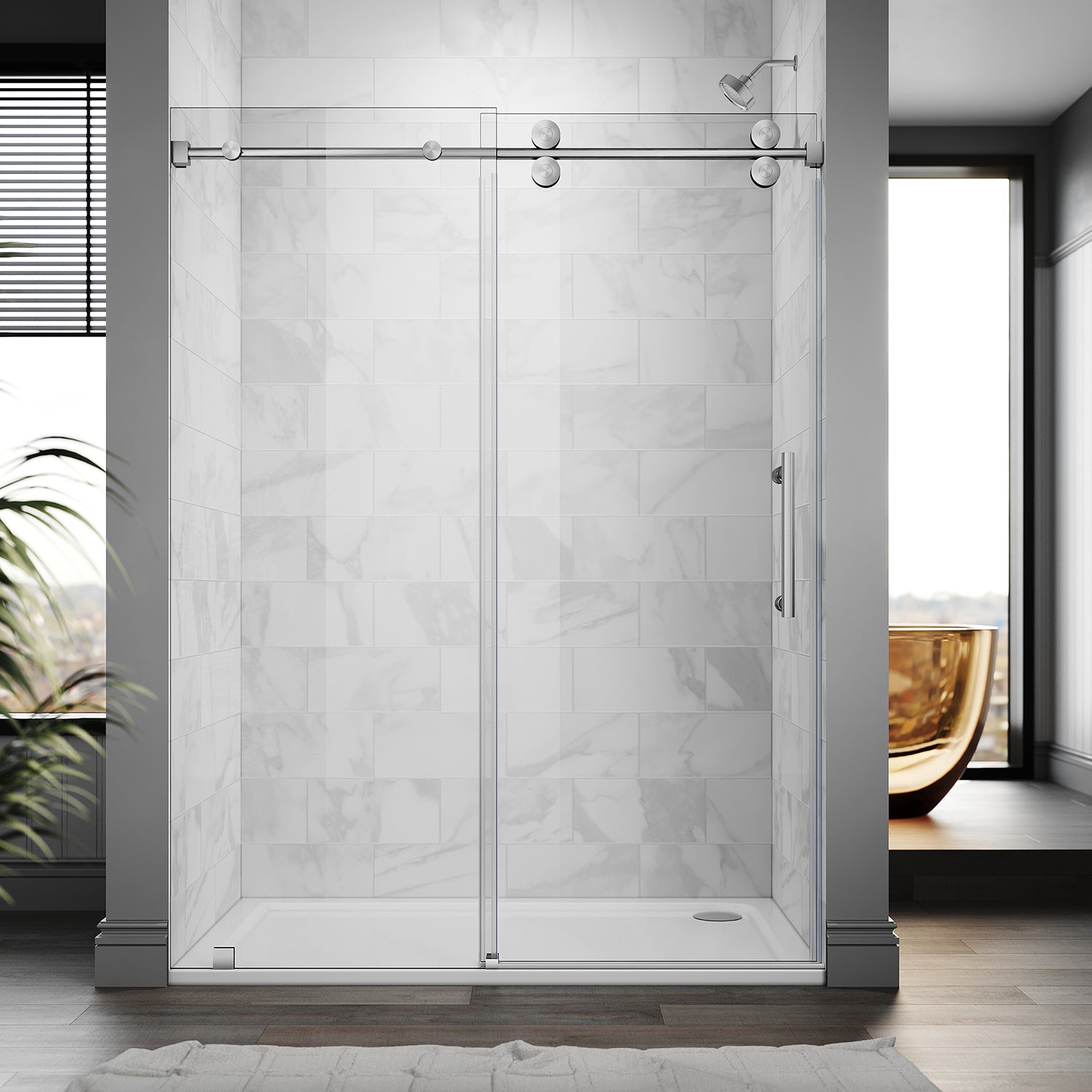
The baseline. Slight green tint visible at panel edges and at oblique light angles. Against neutral or dark tile, unremarkable. Against white or light surrounds, shows as mild discoloration at the glass-threshold interface.
Best for: Dark tile, neutral surrounds, materials that absorb rather than reflect light
Optiwhite / Low-Iron
<0.01% iron oxide · 91% light transmittance
Eliminates the green tint entirely. Light transmittance rises to 91% — the glass reads as genuinely colorless. Most impactful against white or light-colored tile where standard glass introduces a cast. Available on all Unikoo frameless configurations at +$50–$80.
Best for: White tile, natural stone, warm lighting, large panel enclosures
Bronze Tinted
Warm amber tone · ~75–80% transmittance
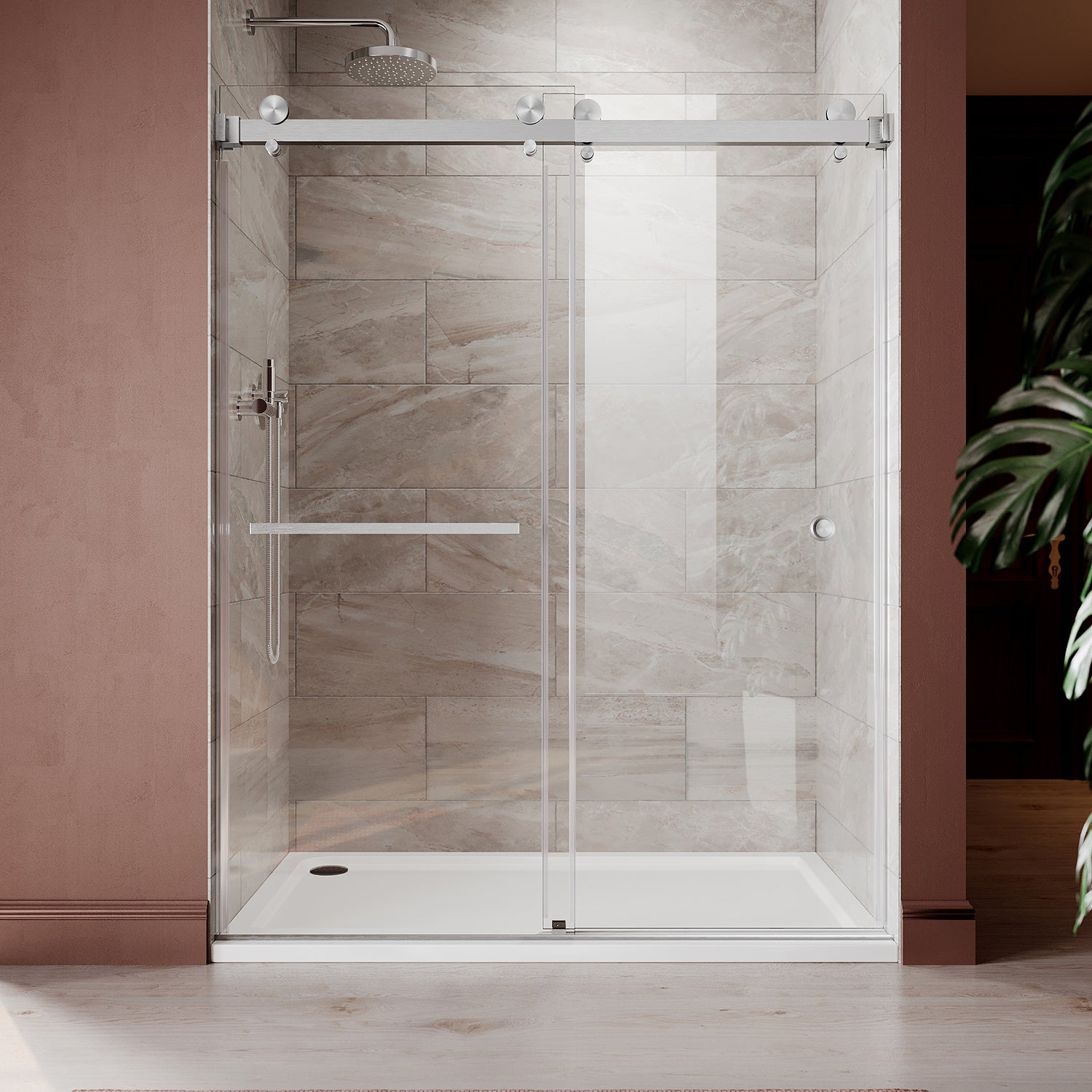
Intentional warm brown tone pairs naturally with brushed gold, oil-rubbed bronze, and aged brass hardware. In warm-palette bathrooms — natural stone, wood accents, terracotta — bronze glass doesn't read as "tinted." It reads as part of a cohesive specification. Provides mild privacy screening.
Best for: Warm-metal hardware, natural stone tile, amber-brown-terracotta palettes
Grey / Charcoal Tinted
Cool neutral tone · ~60–70% transmittance
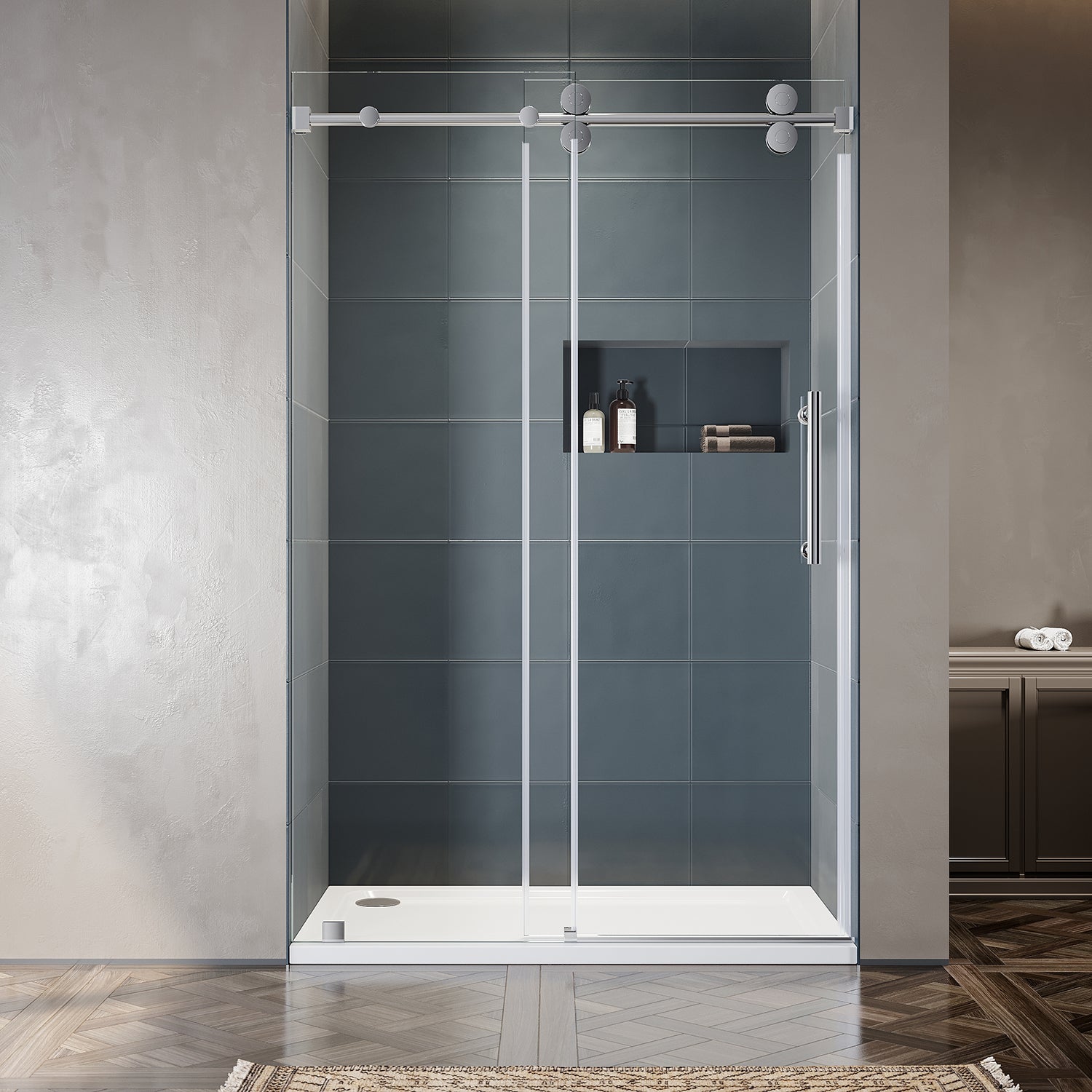
Cool, neutral tone that reduces visible light without introducing color cast. Partial interior privacy — interior detail obscured at normal viewing distances. Pairs with white and grey tile, chrome and brushed nickel hardware, concrete or slate finishes.
Best for: Cool-palette bathrooms, contemporary design, partial privacy preference
Frosted / Acid-Etched
Full privacy · diffused light transmission
Matte translucent surface — maximum visual privacy at all angles with soft, diffused light. Note: frosted glass eliminates the interior tile visibility that defines the frameless aesthetic. Best for shared bathrooms, hotel-style open plans, or where privacy outweighs tile visibility.
Best for: Shared bathrooms, open-plan master suites, full-privacy applications
Reeded / Fluted
Corrugated profile · distorts transmitted light
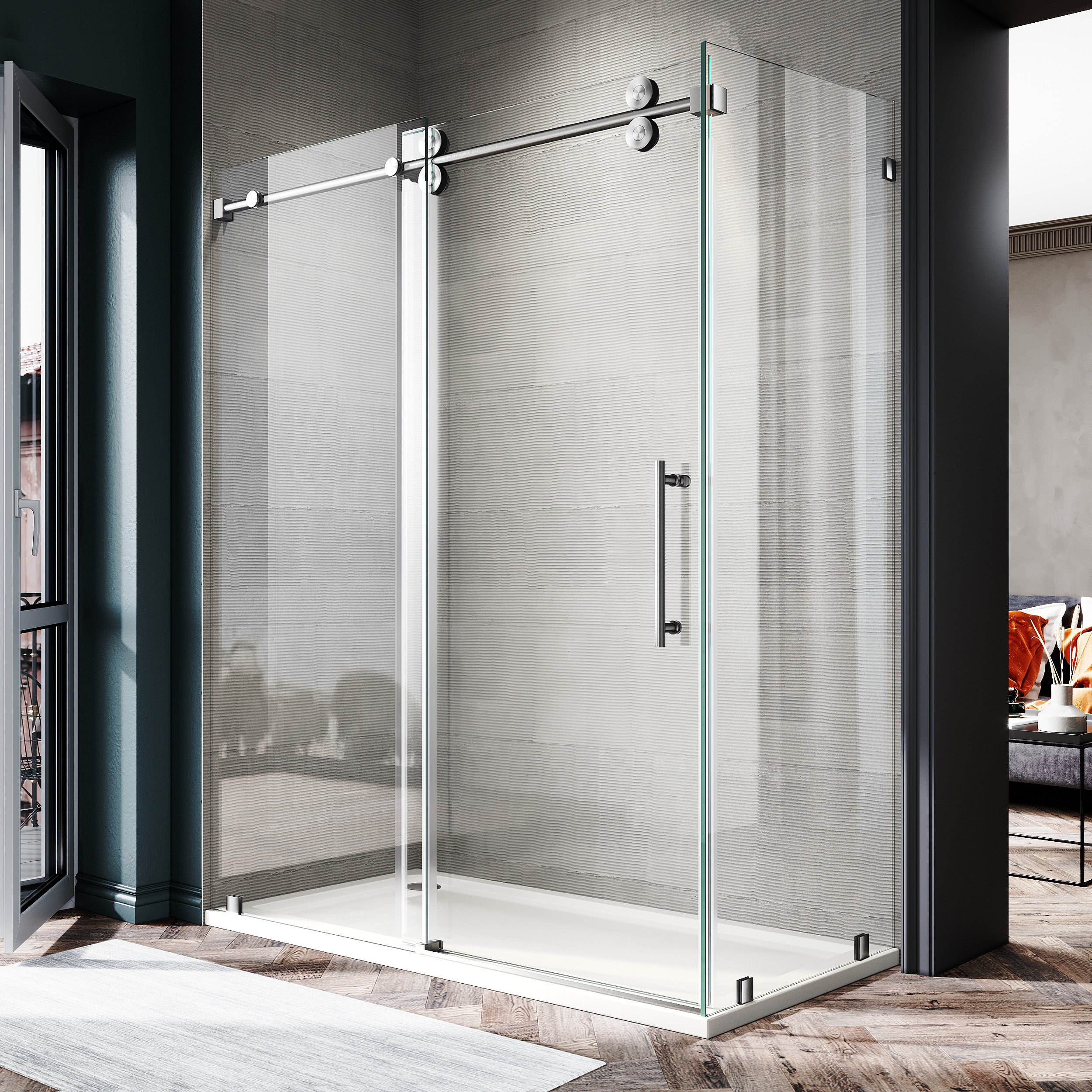
Structural texture produced during the float process — permanent and consistent. Distorts light without blocking it entirely. Currently the most discussed specialty glass in residential interiors, appearing simultaneously in shower enclosures, cabinet fronts, and interior doors. Creates cohesive material language across a space.
Best for: Statement enclosures, rooms where multiple surfaces use reeded glass, contemporary design

The Design Decision Framework
Four questions narrow the glass specification to the correct option for your specific bathroom.
Q1
What is the tile backdrop?
Light / white tile
→ Optiwhite (prevents green cast)
Warm natural stone
→ Bronze (extends warm palette)
Cool grey / concrete
→ Grey tint (maintains palette)
Dark / neutral tile
→ Standard clear (no modification needed)
Q2
What is the hardware finish?
Brushed Gold / ORB→ Bronze glass
Chrome / BN→ Clear or grey
Matte Black→ Grey or charcoal
Q3
What is the visual privacy requirement?
Full visibility
Clear or Optiwhite
Partial privacy
Bronze or grey tint
Full privacy
Frosted or heavily tinted
Q4
What is the enclosure's role in the room?
Disappear visually
Optiwhite or clear
Blend warm palette
Bronze
Be a design element
Reeded or patterned
What Tinted Glass Doesn't Change
Glass tint is a surface color property — it has no effect on structural performance, safety certification, or maintenance characteristics. A bronze-tinted 3/8-inch SGCC-certified tempered panel is structurally identical to a clear panel of the same specification. EnduroShield coating on tinted glass maintains the same 90% cleaning time reduction as on clear glass.
✓
SGCC certification
Unchanged — applies to all glass types
✓
EnduroShield coating
90% cleaning reduction — same on tinted
✓
3/8 in. 10mm spec
Structural performance unchanged
One functional note: Tinted glass reduces visible light transmittance. In bathrooms with limited natural light, heavily tinted glass can make the shower enclosure feel darker during use than the adjacent bathroom space. For bathrooms with strong natural or artificial lighting, this is rarely a practical concern.
Glass type is specified at order — confirm before fabrication
Clear · Optiwhite · Bronze · Grey · Frosted · Reeded — all available via custom quote
Request a quote →
Shop frameless shower doors · Custom glass specification — quote in 2 hours · Contractor wholesale pricing